
Introduction
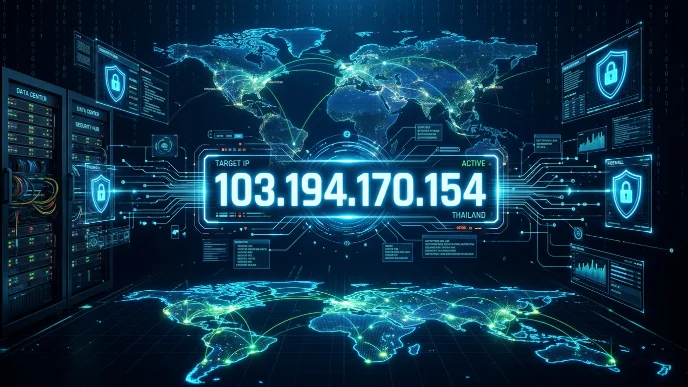
The internet runs on a system of digital identifiers known as IP addresses, and every connected device uses one to communicate online. The address 103.194170.154 represents a public IPv4-style network identifier that may appear in logs, server reports, network tools, analytics platforms, or cybersecurity investigations. Many people search unfamiliar IP addresses to understand where they come from, whether they are safe, and what information they reveal.
Understanding an 103.194170.154 IP address is important for website owners, cybersecurity professionals, students, businesses, and ordinary internet users. An IP address can help identify a network provider, approximate geographic region, hosting organization, or suspicious activity source. However, it is equally important to understand the limitations of IP tracking because an IP address alone usually cannot reveal someone’s exact identity or physical location.
This article explains everything about the IP address 103.194170.154, including how IP addresses work, how lookup systems function, security implications, geolocation technology, privacy concerns, and modern internet networking systems.
Understanding What an IP Address Means
An IP address, or Internet Protocol address, is a numerical identifier assigned to devices connected to a network that uses the Internet Protocol for communication. These addresses help devices send and receive data correctly across the internet. Every website visit, email, streaming session, or online transaction relies on IP-based communication.
Most modern public addresses still use the IPv4 system, which consists of numerical segments separated by periods. IPv4 uses a 32-bit structure and has been the foundation of internet networking since the early 1980s. Due to the growth of internet-connected devices worldwide, IPv4 exhaustion became a major issue, leading to the development of IPv6.
An address such as 103.194170.154 can appear in server records, firewall logs, security alerts, or website analytics systems. Network administrators often investigate unfamiliar addresses to determine whether traffic is legitimate or potentially harmful.
How IP Address Lookup Systems Work
IP lookup tools are designed to retrieve publicly available information associated with an internet address. These tools use global routing databases, regional internet registry information, ISP records, and geolocation datasets to estimate where an IP originates and which network organization controls it.
When users search an address like 103.194170.154, lookup systems may display details such as the hosting provider, ISP, ASN number, approximate country, city region, timezone, and network ownership information. Some advanced tools also analyze fraud indicators, VPN usage, proxy detection, and malicious behavior patterns.
These systems do not directly access personal devices. Instead, they rely on public routing information and geolocation databases maintained by internet organizations and commercial intelligence services.
Geolocation and Approximate Network Tracking
One of the most searched aspects of an IP address is its geographic location. IP geolocation systems attempt to estimate where a network connection originates by analyzing internet infrastructure records and ISP routing information.
However, geolocation accuracy has important limitations. Country-level identification is generally reliable, but city-level precision varies significantly. VPN services, mobile networks, corporate proxies, and shared internet infrastructure can distort location accuracy.
An address like 103.194170.154 may point to a general region or internet provider rather than a precise physical location. This is why cybersecurity experts caution against assuming that IP geolocation reveals exact user identities.
Security Concerns Related to Unknown IP Addresses
Many people investigate unfamiliar IP addresses because of security concerns. Suspicious login attempts, spam traffic, bot activity, failed authentication requests, and unusual server behavior often lead administrators to check IP logs.
Modern cybersecurity systems use IP intelligence databases to identify suspicious behavior patterns. These systems analyze whether an address is associated with VPN usage, known malicious hosting, spam networks, or automated attacks.
Researchers have also studied how malicious websites use hosting infrastructure and rotating IP systems to avoid detection. Cybercriminals frequently shift between providers and networks to reduce the chances of being blocked permanently.
For this reason, organizations monitor unusual IP activity carefully and often combine IP analysis with firewall protection, multi-factor authentication, and network monitoring tools.
Public IP Addresses and Online Privacy
Public IP addresses are visible to websites and online services whenever a device connects to the internet. This visibility is necessary because websites need a return address to send requested content back to users.
Despite common misconceptions, an IP address alone usually cannot expose detailed personal information. Websites may estimate a user’s general location or internet provider, but they cannot directly identify a person’s name, exact address, or browsing history without additional data sources.
Many users protect privacy through VPN services, proxy systems, encrypted DNS technologies, and secure browsers. These technologies help reduce tracking exposure and improve anonymity while browsing online.
Difference Between Public and Private IP Addresses
Understanding the difference between public and private IP addresses is essential in networking. Public addresses are visible on the internet and assigned by internet service providers, while private addresses operate only within local networks such as homes or offices.
For example, devices connected to a home Wi-Fi router often use private addresses internally while sharing a single public address externally through Network Address Translation, commonly known as NAT. This system allows multiple devices to connect to the internet simultaneously using one ISP-issued public IP.
Addresses like 103.194170.154 are generally treated as public-facing internet identifiers because they appear in online routing systems and internet-accessible environments.
Why IP Addresses Matter in Cybersecurity
IP addresses are critical components of modern cybersecurity operations. Security systems use IP analysis to detect threats, block malicious traffic, investigate suspicious activity, and monitor unauthorized access attempts.
Businesses often maintain firewall rules that restrict or allow traffic from specific IP ranges. Security analysts also review IP reputation databases to determine whether traffic comes from trusted or suspicious sources.
Academic cybersecurity research has shown that malicious IP detection plays an important role in reducing fraud, phishing attacks, malware distribution, and botnet activity. Threat intelligence systems rely heavily on continuously updated IP reputation databases.
For organizations handling sensitive customer information, monitoring unusual IP behavior is a standard part of digital risk management.
IPv4, IPv6, and the Future of Internet Addressing
The address 103.194170.154 follows the traditional IPv4 structure, which remains the most widely used internet addressing format globally. IPv4 uses four numerical segments and provides billions of unique combinations, but the rapid growth of connected devices created address exhaustion problems over time.
To solve this issue, IPv6 was introduced using a 128-bit structure capable of supporting vastly larger address spaces. IPv6 addresses look very different from IPv4 because they use hexadecimal formatting and multiple grouped segments.
Although IPv6 adoption continues to grow worldwide, IPv4 and IPv6 currently operate side by side across much of the internet infrastructure. Many websites, servers, and internet providers still rely heavily on IPv4 systems today.
Common Reasons People Search Specific IP Addresses
There are many reasons users investigate addresses such as 103.194170.154. Website owners may notice unusual traffic in analytics logs. Businesses may review IP activity after failed login attempts or suspicious transactions. Gamers sometimes analyze server connections, while cybersecurity researchers investigate network threats.
Ordinary internet users may also search IP addresses after receiving strange emails, suspicious messages, or unexpected account alerts. In many cases, the goal is simply to verify whether the source appears legitimate or dangerous.
Because IP addresses are part of almost every internet interaction, they frequently appear in router settings, firewall logs, hosting dashboards, email headers, and server monitoring systems.
Conclusion
The IP address 103.194170.154 represents part of the complex infrastructure that powers modern internet communication. Like all public IP addresses, it functions as a digital network identifier that enables devices and services to exchange information online.
Understanding how IP addresses work is increasingly important in a world driven by cybersecurity, digital privacy, cloud computing, and global connectivity. While IP lookup tools can provide valuable information about network ownership, approximate location, and internet routing, they also have limitations and should not be treated as exact identity-tracking systems.
As internet technology continues evolving through IPv6 expansion, advanced cybersecurity tools, and stronger privacy systems, IP addresses will remain one of the foundational elements of global digital communication.
Write a complete article, don’t do more research, pick all details Please write a complete article and add too many research details in the article according to my keyword and related topics. Start with the intro and close with the conclusion. The article should be written in paragraphs with H2 headings, not in points
103.194170.154 – Complete Guide to IP Address Tracking, Network Security, Geolocation, and Internet Privacy
Introduction
The internet depends on a complex system of digital communication, and one of the most important elements in that system is the IP address. An IP address acts like a digital identifier that allows devices, servers, websites, and online services to communicate with each other across networks worldwide. The address 103.194170.154 is an example of a public IPv4-style identifier that users may encounter in server logs, cybersecurity alerts, analytics dashboards, or network investigations.
People often search unknown IP addresses for several reasons. Website owners may want to verify suspicious visitors, cybersecurity analysts may investigate unusual traffic, and regular internet users may simply want to understand whether a connection is safe. Understanding how IP addresses work has become increasingly important because internet privacy, online fraud prevention, and digital security are now major concerns for businesses and individuals alike.
This article explains everything related to the IP address 103.194170.154, including how IP addresses function, how lookup tools work, what information can be discovered from an address, how geolocation operates, and why IP intelligence is critical in modern cybersecurity systems.
Understanding What an IP Address Really Is
An IP address, short for Internet Protocol address, is a numerical label assigned to every device connected to a network that uses internet communication protocols. Computers, smartphones, routers, servers, gaming systems, and even smart home devices rely on IP addresses to exchange information online. Without IP addressing systems, websites and digital services would not know where to send requested data.
Most public internet systems still rely heavily on IPv4, which uses four numerical sections separated by periods. IPv4 addresses use a 32-bit structure that can generate billions of unique combinations. The rapid growth of internet-connected devices eventually caused IPv4 exhaustion, leading to the development of IPv6 technology with much larger addressing capacity.
When users encounter an address like 103.194170.154, it is usually because that address appeared in network activity logs, website traffic reports, firewall systems, or authentication records. Network administrators commonly analyze such addresses to determine whether the activity connected to them appears legitimate or suspicious.
How IP Address Lookup Systems Operate
IP lookup systems are online tools that collect publicly available routing and registration data associated with internet addresses. These tools use information maintained by internet registries, network operators, autonomous systems, and geolocation databases to estimate where an IP address belongs and which organization manages it.
When someone searches for 103.194170.154 using an IP lookup tool, the system may display details such as country, region, internet service provider, hosting company, ASN number, timezone, reverse DNS records, and network ownership information. Some modern platforms also provide proxy detection, VPN identification, and fraud analysis capabilities.
These lookup systems do not directly access private user information. Instead, they rely on publicly accessible infrastructure records and commercial geolocation databases that map internet address ranges to providers and approximate locations.
Geolocation and Approximate Physical Location Tracking
IP geolocation is one of the most commonly searched features associated with internet addresses. Geolocation systems attempt to estimate where a device or network connection originates based on internet infrastructure data and ISP registration records.
Country-level accuracy for IP geolocation is usually very reliable, while city-level precision can vary significantly. In many situations, the displayed location may actually represent the ISP’s network hub or regional data center instead of the user’s exact physical location. VPN services, mobile carriers, shared hosting systems, and corporate proxy servers can also affect geolocation accuracy.
This means that an address like 103.194170.154 may reveal a general region or service provider but usually cannot identify someone’s exact home address or personal identity. Cybersecurity experts repeatedly warn against treating IP geolocation as precise individual tracking technology.
Why Unknown IP Addresses Are Investigated
There are many reasons why individuals and organizations investigate unfamiliar IP addresses. Website owners often notice strange visitor activity inside analytics dashboards, while companies may investigate failed login attempts, suspicious traffic spikes, or unauthorized server requests.
Cybersecurity teams frequently analyze addresses associated with spam campaigns, malware delivery systems, phishing attempts, and brute-force login attacks. IP intelligence databases help determine whether a network address has a history of suspicious or malicious behavior.
Researchers studying online security have shown that malicious actors often rotate between hosting providers and IP ranges to avoid detection. Because of this, organizations continuously monitor network behavior patterns and use automated systems to identify unusual activity quickly.
Public and Private IP Addresses Explained
Understanding the difference between public and private IP addresses is essential in networking. Public IP addresses are visible on the internet and assigned by internet service providers, while private addresses exist only inside local networks such as homes, schools, or offices.
Most home networks use private IP addresses internally through routers. Devices such as laptops, smartphones, and smart TVs communicate locally using private addressing systems, while the router itself communicates externally using a single public IP address provided by the ISP. This process is managed through Network Address Translation, commonly known as NAT.
Addresses like 103.194170.154 are considered public-facing identifiers because they can appear in internet routing systems and online network records.
Online Privacy and IP Address Exposure
Every time someone visits a website, sends an email, streams media, or uses an online application, their public IP address becomes visible to the receiving server. This visibility is necessary because internet communication requires a destination and return path for data transfer.
However, there are many misconceptions about what an IP address can actually reveal. An IP address alone generally cannot expose a person’s exact name, phone number, browsing history, or home address. Identifying an individual typically requires ISP cooperation and legal authorization.
To improve online privacy, many users rely on VPN services, encrypted DNS systems, proxy networks, and secure browsers. These technologies help reduce tracking visibility and make it more difficult for websites to determine a user’s actual location or internet provider.
The Importance of IP Intelligence in Cybersecurity
Modern cybersecurity systems rely heavily on IP intelligence and reputation analysis. Security platforms continuously monitor incoming traffic and evaluate whether specific IP ranges are associated with fraud, spam, malware distribution, or suspicious automation.
Businesses often maintain firewall rules that automatically block high-risk addresses or suspicious geographic regions. Financial institutions, cloud providers, and e-commerce platforms use IP reputation systems to detect fraudulent logins, fake account creation attempts, and payment abuse.
IP analysis also plays a critical role in incident response investigations. Security analysts frequently review network logs to identify unauthorized access attempts, investigate suspicious server behavior, and trace the origin of cyberattacks.
IPv4, IPv6, and the Future of Internet Networking
The address 103.194170.154 follows the traditional IPv4 addressing structure that has powered the internet for decades. IPv4 remains widely used because many existing systems, websites, and internet providers still rely on it heavily.
As the number of connected devices increased worldwide, the available pool of IPv4 addresses became limited. To solve this issue, engineers developed IPv6, which uses a much larger 128-bit address structure capable of supporting an enormous number of devices.
IPv6 addresses appear very different from IPv4 because they use hexadecimal formatting and grouped character sections rather than simple numerical blocks. Although IPv6 adoption continues growing globally, IPv4 and IPv6 currently coexist across much of the internet infrastructure.
Common Uses of IP Address Tracking
IP tracking technology is used in many legitimate industries and digital systems. Businesses analyze IP addresses for fraud prevention, website personalization, cybersecurity protection, and traffic analytics. Streaming services may use IP geolocation to enforce regional licensing restrictions.
Law enforcement agencies sometimes investigate IP addresses during cybercrime investigations, although legal authorization is usually required before obtaining subscriber information from internet providers.
Regular users also perform IP lookups for practical reasons, such as verifying suspicious emails, checking server locations, diagnosing network issues, or confirming whether VPN protection is functioning correctly.
Security Risks Associated With Public IP Exposure
Although public IP addresses are necessary for internet communication, they can sometimes become targets for malicious activity. Cybercriminals may scan public IP ranges looking for vulnerable servers, poorly configured routers, or outdated software systems.
Exposed IP addresses may also experience brute-force login attempts, denial-of-service attacks, spam activity, or automated bot scanning. However, simply knowing an IP address does not automatically allow hackers to control a device. Successful attacks usually require additional vulnerabilities or weak security configurations.
To reduce risk, cybersecurity professionals recommend using updated firewalls, strong passwords, encrypted communication systems, and multi-factor authentication wherever possible.
Conclusion
The IP address 103.194170.154 represents one small part of the enormous digital infrastructure that powers the global internet. Like all public IP addresses, it functions as a communication identifier that enables devices, websites, and online services to exchange information efficiently across networks worldwide.
Understanding how IP addresses work is increasingly important in today’s digital environment because cybersecurity, online privacy, fraud prevention, and internet intelligence systems all depend heavily on IP-based communication. While IP lookup tools can reveal useful details such as network ownership, approximate geographic location, and ISP information, they are not precise personal identification systems.