
Introduction
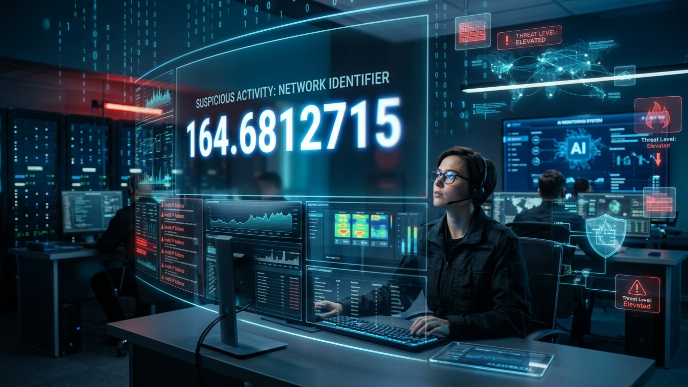
The internet relies on complex systems that allow billions of devices to communicate with one another every day. Behind every website visit, online transaction, email exchange, and mobile application interaction is a network infrastructure built upon numerical identifiers. Among these identifiers, Internet Protocol addresses play a critical role in ensuring data reaches its intended destination. Occasionally, unusual numeric strings such as 164.6812715 appear in network logs, technical reports, online discussions, or search engine queries, leading many people to wonder about their meaning and significance.
At first glance, 164.6812715 resembles an IP address. However, a closer examination reveals that it does not follow the standard formatting rules used by IPv4 or IPv6 addressing systems. This has led cybersecurity professionals, network administrators, developers, and curious internet users to investigate whether the number represents a technical error, a malformed address, a software-generated identifier, or a data-processing anomaly.
As cybersecurity awareness continues growing, understanding unusual network identifiers becomes increasingly important. Modern digital environments generate enormous amounts of technical data, and even small formatting inconsistencies can raise questions regarding system security, data integrity, and network performance. Exploring the significance of identifiers like 164.6812715 helps users better understand how internet infrastructure operates and why proper data formatting remains essential in digital communications.

What Is 164.6812715 and Why Does It Attract Attention?
The number 164.6812715 frequently attracts attention because it appears similar to a traditional IP address while failing to meet accepted networking standards. Standard IPv4 addresses consist of four numerical segments separated by periods, with each segment ranging from zero to 255. The structure of 164.6812715 does not follow these requirements, making it an invalid IPv4 address.
Many people encounter unusual numerical strings while reviewing server logs, network monitoring tools, browser data, or cybersecurity reports. When a value resembles a familiar format but contains irregularities, users naturally search for explanations. This curiosity contributes to the growing online interest surrounding identifiers like 164.6812715.
Technical specialists often investigate malformed identifiers because they can indicate configuration errors, software bugs, data corruption, logging anomalies, or improper system formatting. While not every unusual identifier represents a security threat, understanding its origin can help organizations improve system reliability and reduce operational issues.
Understanding How IP Address Systems Work
Internet Protocol addresses serve as unique identifiers that allow devices to communicate across networks. Every device connected to the internet requires an address that helps route information between servers, websites, applications, and users. Without these identifiers, digital communication would be impossible because data packets would have no destination.
The most widely recognized addressing format is IPv4. This system uses four numerical sections separated by periods. Each section contains a value between zero and 255. Examples include addresses such as 192.168.1.1 or 8.8.8.8. These standardized structures allow routers and networking equipment to interpret and process data efficiently.
As internet usage expanded globally, IPv6 was introduced to provide a much larger address space. Unlike IPv4, IPv6 uses hexadecimal values and a significantly different formatting structure. Both systems rely on strict formatting rules, which explains why identifiers such as 164.6812715 stand out as irregular entries within networking environments.
Why Invalid IP Formats Appear in Technical Systems
Invalid IP-style numbers often appear due to software processing errors, data conversion problems, logging mistakes, or incomplete records. Modern applications handle enormous volumes of data, and even minor coding issues can generate malformed identifiers that resemble legitimate network addresses.
Data corruption is another common source of unusual numeric values. During storage, transmission, or database processing, information can become altered unexpectedly. When systems attempt to display damaged records, the resulting output may resemble partially formatted network identifiers that confuse users and administrators.
Human error can also contribute to invalid address formats. Network administrators, developers, and analysts frequently work with large datasets containing thousands of entries. A simple formatting mistake during data entry, scripting, or report generation can produce values that appear unusual when reviewed later.
The Relationship Between Network Logs and Numeric Identifiers
Network logs serve as detailed records of activity occurring across digital systems. These logs track connections, requests, errors, authentication events, and system operations. Because logs collect vast amounts of information, they often contain numerical identifiers that may not be immediately recognizable to casual users.
Administrators rely on logs to diagnose performance issues, identify security threats, and monitor infrastructure health. When unusual identifiers appear within these records, investigators often examine surrounding events to determine whether the entry represents legitimate activity or an unexpected anomaly.
In many cases, malformed identifiers are harmless artifacts generated during automated processing. However, security professionals still review such entries carefully because anomalies can occasionally reveal software vulnerabilities, misconfigurations, or attempted unauthorized access activities.
Cybersecurity Implications of Unusual Network Identifiers
Cybersecurity teams pay close attention to irregular network activity because attackers frequently attempt to conceal malicious actions within large volumes of legitimate traffic. Unusual identifiers sometimes trigger security investigations simply because they deviate from expected patterns.
Threat detection systems often use anomaly analysis to identify suspicious behavior. Rather than searching exclusively for known threats, modern cybersecurity tools monitor for unexpected events that may indicate emerging risks. An invalid identifier such as 164.6812715 could attract attention because it differs from standard network traffic characteristics.
Although most malformed identifiers are ultimately traced to technical issues rather than cyberattacks, organizations benefit from investigating anomalies systematically. This proactive approach helps improve security visibility while reducing the likelihood that genuine threats remain undetected within network environments.
Data Validation and the Importance of Accurate Formatting
Data validation plays a critical role in maintaining reliable digital systems. Every application, database, and networking platform depends on structured information that follows predefined rules. Validation mechanisms help ensure that data remains accurate, consistent, and usable throughout processing workflows.
Without proper validation controls, invalid entries can spread through multiple systems and create operational challenges. An incorrectly formatted address may trigger software errors, reporting inaccuracies, failed network requests, or security alerts that require unnecessary investigation.
Organizations increasingly invest in automated validation technologies to minimize these risks. Modern software platforms often verify data formats before accepting input, helping prevent malformed identifiers from entering production environments and reducing the likelihood of future complications.
Digital Tracking Systems and Identifier Management
The modern internet relies heavily on identifiers beyond traditional IP addresses. Websites, cloud services, mobile applications, analytics platforms, and cybersecurity tools generate numerous tracking codes, session identifiers, device references, and transaction records.
Many of these identifiers contain complex numerical sequences that resemble technical addresses. Users who encounter unfamiliar values may mistakenly assume they represent network locations when they actually serve entirely different purposes within software ecosystems.
Understanding the distinction between legitimate IP addresses and other digital identifiers helps improve technical literacy. As online systems become increasingly sophisticated, recognizing how different identifiers function enables users to interpret technical information more accurately and avoid confusion.
Network Monitoring and Anomaly Detection Technologies
Network monitoring technologies continuously analyze digital infrastructure to ensure performance, stability, and security. These systems collect information from servers, routers, applications, databases, and cloud environments. Their primary goal is to identify issues before they impact users or business operations.
Anomaly detection has become a particularly valuable capability within modern monitoring platforms. Rather than relying solely on predefined rules, advanced systems use behavioral analysis to identify unusual patterns that may require further investigation. Unexpected identifiers often appear within these anomaly reports.
Artificial intelligence and machine learning technologies are increasingly enhancing network monitoring capabilities. These systems can analyze enormous datasets and identify subtle irregularities that human analysts might overlook. As a result, unusual values such as 164.6812715 are more likely to be detected and examined within modern infrastructure environments.
Common Causes of Technical Data Anomalies
Technical anomalies occur for many reasons, ranging from software bugs to hardware failures. Programming errors represent one of the most common causes. Even small mistakes in code can alter how data is processed, displayed, or stored, leading to unexpected outputs.
System integrations can also introduce anomalies. Organizations often connect multiple software platforms together, each using different data formats and processing methods. During information exchanges, formatting inconsistencies may emerge that create unusual records and identifiers.
Rapid technological growth has increased the complexity of digital ecosystems. Cloud computing, distributed applications, mobile services, and global networking infrastructure generate massive volumes of information. Within such environments, occasional anomalies are inevitable, making monitoring and validation increasingly important.
The Future of Network Security and Data Integrity
As digital infrastructure continues evolving, the importance of data integrity will only increase. Organizations depend on accurate information to support cybersecurity operations, network management, customer services, and business decision-making. Ensuring that identifiers remain properly formatted is an essential component of maintaining reliable systems.
Future advancements in artificial intelligence, automated monitoring, and predictive analytics will further improve the ability to identify irregularities before they create significant problems. These technologies will help organizations distinguish harmless anomalies from genuine security concerns more efficiently.
The growing sophistication of digital systems means that technical literacy will remain valuable for both professionals and everyday users. Understanding concepts such as IP addresses, identifier validation, anomaly detection, and cybersecurity monitoring helps individuals navigate increasingly complex digital environments with greater confidence.
Conclusion
The identifier 164.6812715 attracts attention because it resembles a network address while failing to conform to standard IP formatting requirements. Although it is not a valid IPv4 address, its appearance highlights important topics related to networking, cybersecurity, data validation, and digital infrastructure management.
Unusual identifiers frequently emerge from software errors, logging anomalies, data-processing issues, or formatting inconsistencies. While most cases do not indicate malicious activity, they often serve as useful reminders of the importance of accurate data management and systematic monitoring practices.
As technology continues advancing, organizations and individuals alike will encounter increasingly complex digital environments. Understanding how identifiers function, why anomalies occur, and how cybersecurity systems respond to irregular data helps build stronger awareness of the interconnected systems that power the modern internet. By maintaining a focus on accuracy, validation, and security, digital ecosystems can remain reliable, resilient, and better prepared for future challenges.