
Introduction to Upgrade Oxzep7 Python
The keyword upgrade oxzep7 python has recently become popular among developers, system administrators, automation engineers, and Python users searching for solutions related to Python upgrades, environment modernization, and dependency compatibility. Although Oxzep7 does not appear in official Python documentation or major package repositories, many discussions online associate it with custom Python environments, internal development frameworks, experimental runtimes, or project-specific automation systems.
Upgrade oxzep7 python remains one of the world’s most important programming languages because of its flexibility, readability, and extensive ecosystem. It powers artificial intelligence systems, machine learning pipelines, web applications, cloud infrastructure, cybersecurity tools, scientific computing platforms, and large-scale automation workflows. As Python evolves, developers must regularly upgrade their environments to maintain security, compatibility, and performance.
In most cases, “upgrade oxzep7 python” refers to updating the Python interpreter used within a specialized environment while ensuring that dependencies, frameworks, and applications continue functioning correctly. Understanding how Python upgrades work is essential because improper upgrades can lead to package conflicts, broken imports, dependency failures, and unstable production systems.
What Oxzep7 Python Likely Represents
Based on available technical discussions, Oxzep7 does not appear to be an officially recognized Python library, framework, or package available through the Python Package Index (PyPI). Multiple technical articles analyzing the term conclude that it is most likely a custom project environment, internal enterprise framework, proprietary runtime layer, or autogenerated system artifact rather than a public Python module.
Some websites describe Oxzep7 as a specialized Python-based environment designed for automation, analytics, or AI-related workloads. Others suggest that the term may originate from corrupted dependency logs, autogenerated package names, or misconfigured virtual environments.
Despite the uncertainty surrounding its exact origin, the broader concept behind “upgrade oxzep7 python” remains highly relevant to modern software development. Developers everywhere face challenges involving Python interpreter upgrades, dependency management, virtual environment migration, and compatibility testing.
Why Python Upgrades Matter in Modern Development
Python upgrades are critical because older Python versions eventually stop receiving security updates and compatibility support. Unsupported versions become vulnerable to cybersecurity risks, dependency failures, and performance limitations.
Modern Python releases introduce substantial improvements in execution speed, memory optimization, asynchronous processing, and developer productivity. Python 3.11 and newer versions significantly improved runtime performance in many workloads, making upgrades especially valuable for AI systems, data pipelines, and automation environments.
Compatibility is another major reason for upgrading. Modern frameworks such as TensorFlow, FastAPI, Pandas, NumPy, and machine learning libraries increasingly require newer Python versions. Developers using outdated environments eventually encounter installation failures or unsupported dependency issues.
Understanding Python Environments and Virtual Isolation
Modern Python development relies heavily on isolated environments. Instead of installing every package globally, developers create separate virtual environments for each project. These isolated environments prevent dependency conflicts and improve system stability.
Virtual environments allow different projects to use different Python versions and dependency sets simultaneously. This is extremely important because one application may require Python 3.9 while another depends on Python 3.12.
Many technical discussions related to Oxzep7 emphasize that developers should never directly overwrite existing production environments during upgrades. Instead, they recommend creating fresh isolated environments and gradually migrating dependencies into the updated setup.
Common Reasons Developers Upgrade Oxzep7 Python Systems
Developers usually upgrade Python environments for several practical reasons. Performance optimization is one of the biggest motivations because modern Python interpreters execute code faster and handle memory more efficiently.
Security improvements are equally important. Older Python releases lose official support over time, leaving applications exposed to known vulnerabilities and outdated cryptographic implementations.
Compatibility with modern tooling is another major factor. AI frameworks, cloud SDKs, container systems, automation libraries, and development platforms often require current Python versions for full functionality. Delaying upgrades eventually increases technical debt and makes future migrations more difficult.
Dependency Management During Python Upgrades
Dependency management is one of the most challenging parts of any Python upgrade process. Python applications rely heavily on third-party libraries, and even small version changes can introduce compatibility problems.
When upgrading environments such as Oxzep7 Python systems, developers often discover that some older libraries no longer support the new interpreter version. This can result in installation failures, import errors, or broken application behavior.
Research into Python dependency maintenance shows that compatibility issues remain one of the biggest obstacles in automated upgrades. Modern research tools now focus on automatically identifying compatible package versions and reducing upgrade-related failures.
Proper dependency management typically involves freezing package versions, validating compatibility, and rebuilding environments incrementally rather than attempting massive upgrades all at once.
Performance Benefits of Newer Python Versions
Recent Python releases introduced major performance improvements that significantly benefit modern applications. Python 3.11 delivered some of the largest execution speed gains in the language’s history, improving many workloads by double-digit percentages.
Asynchronous programming support also continues improving with each release. This benefits APIs, automation pipelines, cloud services, and concurrent processing systems handling large-scale operations.
Modern interpreters additionally improve memory handling, exception tracing, startup speed, and debugging performance. For high-load environments associated with automation or AI workflows, these optimizations can noticeably reduce operational costs and execution time.
Security Improvements in Modern Python Environments
Cybersecurity remains one of the strongest reasons to upgrade Python systems. Unsupported Python versions stop receiving patches from the Python Software Foundation, leaving applications vulnerable to known exploits.
Modern Python releases strengthen encryption support, dependency verification systems, and runtime protections. Updated package ecosystems also receive more active maintenance, reducing exposure to malicious or abandoned libraries.
Technical articles discussing upgrade oxzep7 python consistently emphasize that maintaining updated environments is essential for enterprise compliance, secure automation systems, and safe internet-facing applications.
Organizations handling sensitive data increasingly enforce policies requiring supported Python versions to minimize cybersecurity risk exposure across infrastructure systems.
Common Problems Encountered During Python Upgrades
Although upgrades provide many benefits, developers frequently encounter compatibility problems during migration. One common issue involves outdated libraries relying on deprecated APIs removed from newer Python versions.
Another challenge occurs when developers attempt in-place upgrades without isolating environments first. This can break dependencies, corrupt package installations, or destabilize existing applications.
Community discussions on Reddit frequently recommend creating entirely new environments instead of modifying production setups directly. Many experienced developers stress that virtual environments are the safest and most reliable approach during upgrades.
Some applications also rely on legacy syntax or removed modules, requiring code modifications before they can run successfully on newer Python interpreters.
Why Virtual Environments Are Essential During Upgrades
Virtual environments isolate projects and reduce the risk of system-wide conflicts during upgrades. Developers can safely test newer Python versions without affecting existing applications or production systems.
Tools such as venv, virtualenv, Conda, and pyenv allow developers to maintain multiple interpreters simultaneously. This flexibility is extremely useful for organizations managing diverse software stacks.
Reddit discussions about Python upgrades repeatedly highlight that installing multiple Python versions side-by-side is safer than replacing system-wide interpreters directly.
Using isolated environments also simplifies rollback procedures if compatibility problems emerge after migration.
The Role of Python Upgrades in AI and Automation
Artificial intelligence and automation systems depend heavily on modern Python ecosystems. Most AI frameworks now optimize performance specifically for current Python versions.
Machine learning libraries often discontinue support for older interpreters, forcing organizations to modernize environments to maintain compatibility with updated tools and models.
Automation frameworks similarly benefit from faster execution, stronger concurrency support, and improved package ecosystems available in modern Python releases. This makes upgrades particularly important for cloud automation, DevOps infrastructure, and enterprise orchestration systems.
How Developers Safely Plan Python Upgrades
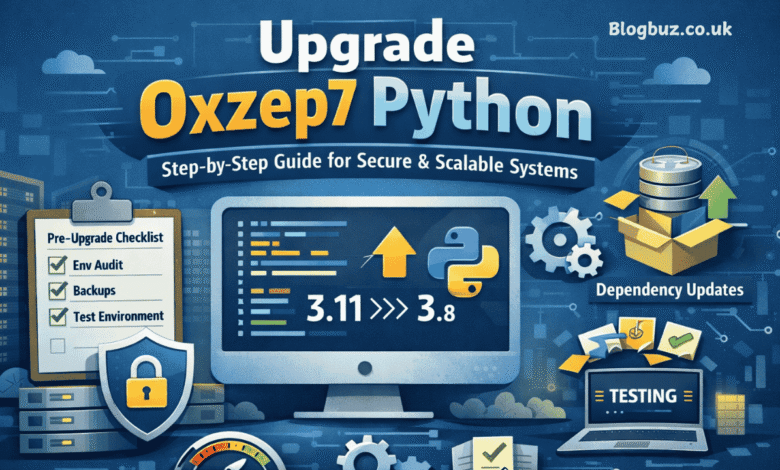
Successful Python upgrades require careful planning rather than rushed implementation. Developers typically begin by auditing existing dependencies and identifying unsupported libraries.
Testing environments are then created to validate compatibility before deployment. This staged approach reduces the likelihood of production outages or unexpected failures.
Technical guides discussing upgrade oxzep7 python repeatedly stress the importance of gradual migration, environment isolation, and dependency verification during every phase of the upgrade process.
Continuous integration systems also help automate compatibility testing, making it easier to identify problems early during the migration process.
Community Advice on Python Version Upgrades
Online developer communities consistently recommend cautious upgrade strategies. Reddit users frequently advise developers not to copy package directories manually between Python versions because compatibility issues may occur.
Other discussions emphasize that newer Python versions are usually worth adopting because long-term maintenance becomes easier on supported releases. However, developers are also reminded that occasional breaking changes still occur between major versions.
The broader community consensus is that regular, incremental upgrades are safer and easier than waiting many years before attempting large migrations.
Future Trends in Python Environment Management
Python ecosystem management continues evolving rapidly as containerization, cloud computing, and AI infrastructure become increasingly important.
Modern tools now focus heavily on reproducible environments, dependency locking, automated compatibility analysis, and isolated runtime systems. Research into automated dependency repair systems is also improving upgrade reliability significantly.
Future Python environment management will likely become more automated, secure, and container-oriented, reducing the complexity developers currently face during upgrades.
Conclusion: Understanding Upgrade Oxzep7 Python
Upgrade oxzep7 python reflects a growing interest in Python modernization, environment maintenance, and dependency management across modern software development ecosystems. Although Oxzep7 itself does not appear to be an officially recognized public framework, discussions surrounding the term highlight many real-world challenges developers face during Python upgrades.
Modern Python upgrades improve performance, strengthen cybersecurity protections, increase framework compatibility, and support advanced AI and automation workflows. However, successful upgrades require careful planning, dependency validation, environment isolation, and compatibility testing.