
Introduction to Pulsamento
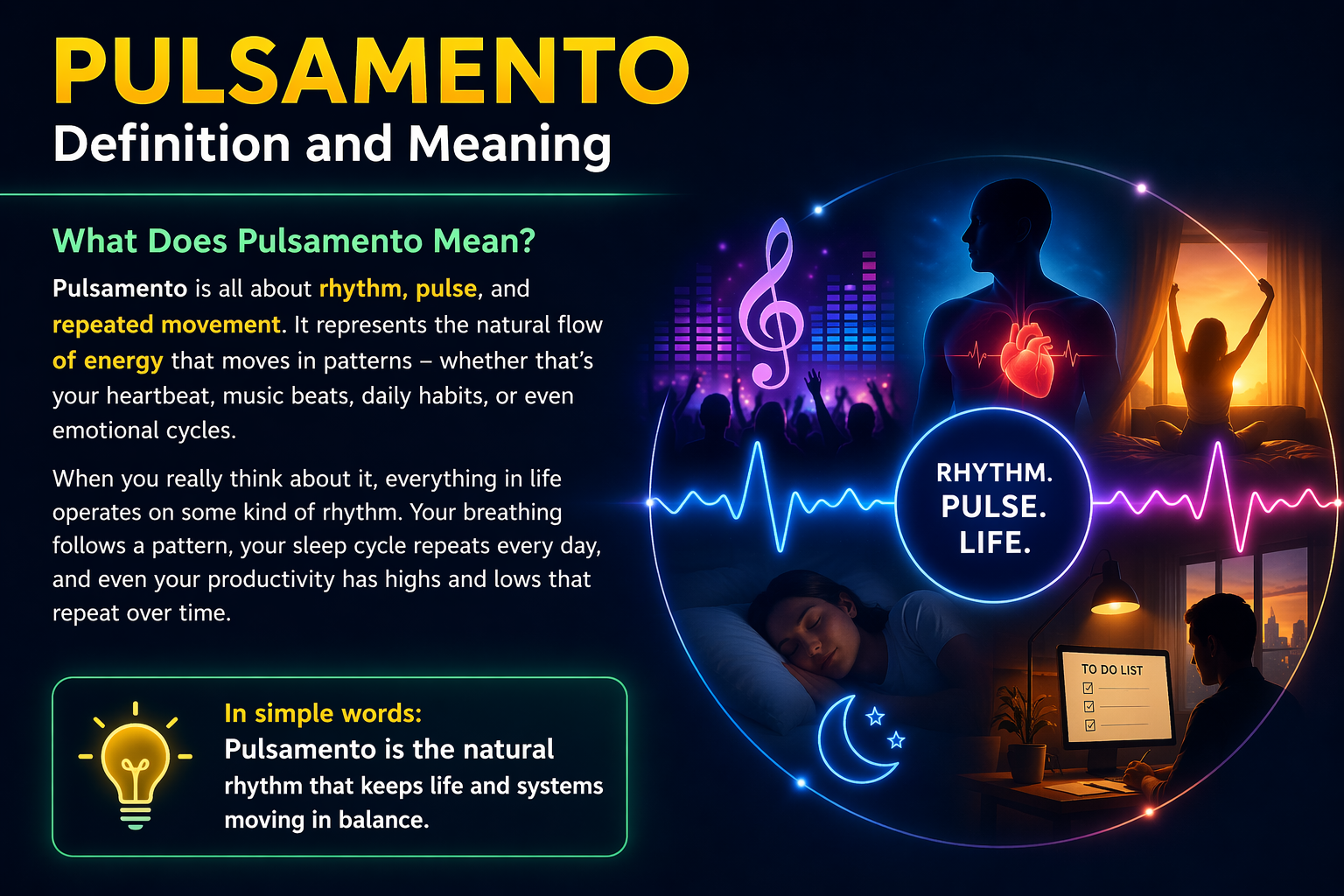
The term “pulsamento” has recently gained attention across different fields, including music, science, health, and digital culture. While it may sound complex or technical, its core meaning is surprisingly simple and deeply connected to everyday life. Pulsamento refers to a rhythmic pulse or repeated movement that creates structure, flow, and continuity in both natural and human-made systems.
From the steady pulsamento beating of the human heart to the rhythm that drives music, pulsamento is present everywhere. It is not limited to one discipline but instead acts as a universal concept that connects biology, technology, and artistic expression. This broad relevance is one of the main reasons why the keyword “pulsamento” is increasingly searched online.
Understanding pulsamento is important because it helps explain how patterns and rhythms influence life, creativity, and systems around us. By exploring its meaning, origin, and applications, readers can gain a deeper appreciation of how rhythm shapes both physical and emotional experiences.
Meaning and Definition of Pulsamento
At its core, pulsamento means rhythmic pulsation or a repeating pattern of movement or vibration. The term is derived from the Italian word “pulsare,” which means to beat, pulse, or throb. This linguistic origin connects pulsamento closely to the idea of continuous rhythmic activity rather than a single isolated action.
In simple terms, pulsamento describes the consistent pulse behind motion, sound, or energy. It can be observed in many forms, such as the ticking of a clock, the rhythm of footsteps, or the oscillation of waves. What makes pulsamento unique is its focus on repetition and predictability, which create stability and balance.
The concept is often used interchangeably with terms like rhythm, vibration, and pulse, but it carries a slightly broader meaning. Pulsamento emphasizes the underlying force that drives these patterns, making it a foundational idea in understanding how systems function and interact.
Origin and Linguistic Background of Pulsamento
The origin of pulsamento can be traced back to Latin roots, specifically the word “pulsare,” meaning to strike or beat repeatedly. Over time, this term evolved into Italian as “pulsamento,” maintaining its connection to rhythmic motion and pulsation.
Historically, the idea of rhythmic movement has been central to human culture. Ancient civilizations used rhythmic patterns in music, rituals, and communication. Drumming, chanting, and dancing all relied on consistent pulses, which are early examples of pulsamento in practice.
As language and culture developed, the concept expanded beyond music and entered scientific and philosophical discussions. Today, pulsamento is used to describe patterns in everything from biological systems to modern technology, showing how a simple idea can evolve into a multidimensional concept.
Pulsamento in Music and Rhythm
In music, pulsamento is one of the most essential elements. It represents the underlying pulse or beat that holds a composition together. Without this steady rhythm, music would lose its structure and become difficult to follow.
Musicians rely on pulsamento to maintain timing and coordination. Whether in classical compositions or modern electronic tracks, the pulse acts as a guiding framework that keeps all elements synchronized. It allows performers to stay connected and ensures that rhythm and melody work together harmoniously.
Beyond technical structure, also contributes to emotional expression in music. A slow, steady pulse can create a sense of calm, while a faster pulse generates energy and excitement. This emotional impact makes pulsamento a powerful tool in artistic expression.
Pulsamento in Human Biology and Health
Pulsamento plays a critical role in the human body, where it is most clearly seen in the heartbeat. The rhythmic contraction and relaxation of the heart create a pulse that circulates blood throughout the body, delivering oxygen and nutrients to essential organs.
In addition to the heart, pulsamento is present in breathing patterns, neural activity, and muscle movements. These rhythmic processes are essential for maintaining balance and proper functioning. A stable pulsamento often indicates good health, while irregular patterns may signal underlying issues.
Modern health technologies also rely on measuring pulsamento to assess fitness and well-being. Devices that track heart rate and activity levels use rhythmic data to provide insights into physical condition. This demonstrates how pulsamento is not only a natural phenomenon but also a key factor in health monitoring.
Pulsamento in Technology and Engineering
In the field of technology, pulsamento appears in the form of signals, oscillations, and repetitive processes. Electronic systems, for example, rely on periodic signals to regulate timing and ensure accurate data transmission.
Machines and mechanical systems also depend on rhythmic cycles to function efficiently. Pumps, engines, and automated processes operate through controlled pulses that maintain consistent performance. Without these patterns, systems would become unstable or inefficient.
In modern digital environments, is essential for communication networks and computing systems. It ensures synchronization, reduces errors, and supports the smooth flow of information. This highlights the importance of rhythmic patterns in both physical and digital technologies.
Pulsamento in Nature and the Environment
Nature is filled with examples of pulsamento, from the rising and falling of ocean waves to the changing of seasons. These natural rhythms create balance and support life on Earth. The concept of pulsamento helps explain how these cycles operate in a predictable and interconnected way.
Biological systems in plants and animals also follow rhythmic patterns. Growth cycles, migration behaviors, and reproductive processes are all influenced by natural pulsamento. These patterns ensure survival and adaptation in changing environments.
Even large-scale phenomena, such as planetary motion and climate cycles, reflect the idea of pulsamento. By understanding these rhythms, scientists can better predict changes and develop strategies to manage environmental challenges.
Psychological and Emotional Aspects of Pulsamento
Pulsamento is not limited to physical systems; it also influences psychological and emotional experiences. Human emotions often follow rhythmic patterns, with periods of excitement, calmness, and stress occurring in cycles.
The brain itself operates through rhythmic electrical activity, known as neural oscillations. These patterns play a role in attention, memory, and perception, demonstrating how pulsamento is deeply connected to mental processes.
Practices such as meditation, breathing exercises, and mindfulness aim to regulate internal rhythms. By stabilizing pulsamento, individuals can improve focus, reduce stress, and achieve a sense of balance. This shows how understanding rhythm can contribute to emotional well-being.
Pulsamento in Modern Culture and Creativity
In modern culture is often used as a metaphor for creativity and energy. Artists, writers, and performers use the concept to describe the flow of ideas and the rhythm of expression. It represents the dynamic movement that drives creative work.
Digital media and entertainment also rely heavily on pulsamento. From music production to video editing, rhythmic patterns are used to create engaging and immersive experiences. The concept has become increasingly relevant in the digital age, where timing and synchronization are crucial.
As technology and culture continue to evolve, remains a central idea that connects different forms of expression. Its versatility allows it to be applied in various contexts, making it a valuable concept for understanding creativity and innovation.
Future Relevance of Pulsamento in a Digital World
Looking ahead, the importance of pulsamento is likely to grow as technology becomes more advanced. Artificial intelligence, data processing, and communication systems all depend on rhythmic patterns to function effectively. Understanding these patterns can lead to more efficient and innovative solutions.
In addition, the growing interest in wellness and mindfulness highlights the role of pulsamento in maintaining balance and health. As people seek ways to manage stress and improve well-being, the concept of rhythm becomes increasingly relevant.
The future of lies in its ability to connect different fields, from science and technology to art and human experience. By recognizing the importance of rhythm, individuals and organizations can better navigate the complexities of modern life.
Conclusion
Pulsamento is a powerful and versatile concept that extends far beyond its simple definition. At its core, it represents the rhythmic pulse that drives movement, energy, and structure in both natural and human-made systems. From music and biology to technology and culture, pulsamento plays a vital role in shaping how the world functions.
By understanding pulsamento, individuals can gain deeper insights into the patterns that influence life, creativity, and innovation. Its presence in everyday experiences highlights the importance of rhythm in maintaining balance and harmony.
As the world continues to evolve, the concept of will remain relevant, offering a framework for understanding complex systems and improving human experiences. Whether in science, art, or daily life, pulsamento serves as a reminder that rhythm is at the heart of everything.