
Introduction
The numeric string 111.90.150.284 often appears in online searches because it looks like an IP address, but its structure raises immediate technical questions. In networking, IP addresses are essential identifiers that allow devices to communicate across the internet. However, not every number formatted like an IP address is actually valid or usable in real-world systems.
Understanding whether 111.90.150.284 is a real IP address requires examining how IPv4 addressing works, what rules govern valid formats, and how systems interpret such numbers. This article provides a complete, research-based explanation of this keyword, including its technical validity, potential uses, and cybersecurity implications.
What Is an IP Address and How It Works
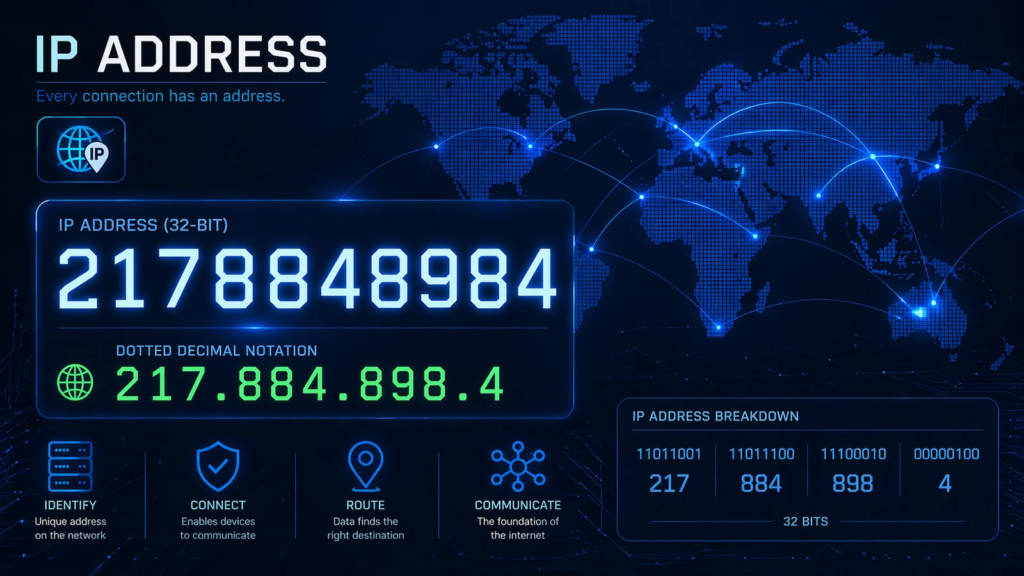
An IP address, or Internet Protocol address, is a unique numerical label assigned to a device connected to a network. It serves two main purposes: identifying the device and enabling data to be routed correctly between systems across the internet.
Every time you visit a website or send data online, your device uses an IP address to communicate with servers. These addresses act like digital locations, ensuring that information reaches the correct destination. Without IP addresses, global internet communication would not function.
IP addresses are typically assigned by Internet Service Providers and can be either static or dynamic, depending on how the network is configured. This assignment system ensures that every connected device can be uniquely identified within the network.
Structure of IPv4 Addresses and Validation Rules
IPv4 addresses follow a strict format consisting of four numbers separated by dots. Each number, known as an octet, must fall within the range of 0 to 255. This is because each octet represents 8 bits of data, limiting its maximum value.
For example, a valid IPv4 address might look like 192.168.1.1, where all segments are within the allowed range. If any segment exceeds 255, the address becomes invalid and cannot be processed by networking systems.
This strict structure ensures consistency across global networks and allows routers and servers to interpret addresses correctly without errors.
Why 111.90.150.284 Is Not a Valid IP Address
The string 111.90.150.284 fails IPv4 validation rules because the last segment, “284,” exceeds the maximum allowed value of 255. Since even one invalid segment makes the entire address unusable, this format cannot function as a real IP address.
Networking systems are designed to detect such errors instantly. When an address exceeds the valid range, it is rejected before any communication attempt occurs. This prevents routing errors and maintains system stability.
As a result, 111.90.150.284 is considered a malformed or invalid IP-like string, rather than a legitimate network identifier.
Common Reasons Invalid IP-Like Strings Appear
Strings like 111.90.150.284 often appear due to data entry mistakes, formatting errors, or automated content generation. In technical environments, such values may be created unintentionally when systems process corrupted or incomplete data.
Another common source is testing environments, where developers use fake or invalid IPs to simulate scenarios without exposing real network information. These placeholders can sometimes appear in logs or documentation.
In online content, such patterns are also used as example data or keywords, even though they do not represent real networking entities.
How Systems Handle Invalid IP Addresses
When a system encounters an invalid IP address, it does not attempt to process it. Instead, it flags the address as incorrect and rejects it immediately. This behavior is built into operating systems, routers, and security tools.
For example, if a server receives a request containing an invalid IP, it will not establish a connection because the address cannot be interpreted within the protocol rules. This prevents communication failures and ensures that only valid data is processed.
This automatic validation is a critical part of maintaining reliable internet infrastructure.
Cybersecurity Perspective on Such Addresses
From a cybersecurity standpoint, invalid IP-like strings such as 111.90.150.284 are generally harmless by themselves. However, they may appear in suspicious contexts, such as spam data, fake logs, or poorly configured systems.
Security professionals analyze patterns of IP usage to detect threats, but invalid addresses are typically filtered out before any meaningful analysis occurs. Their presence may indicate data quality issues rather than actual cyber threats.
Still, understanding these patterns helps professionals identify anomalies and maintain accurate system monitoring.
Difference Between Valid and Invalid IP Addresses
A valid IP address can be assigned to a device, routed across networks, and used in real-time communication. It follows strict formatting rules and is recognized by networking systems worldwide.
An invalid IP address, like 111.90.150.284, cannot be assigned or used in any real network. It exists only as a numerical string without functional meaning in internet communication.
This distinction is important because it helps users avoid confusion when encountering unfamiliar or unusual numeric patterns online.
Importance of IP Accuracy in Networking
Accurate IP formatting is essential for proper network communication. Even a single incorrect number can prevent devices from connecting or exchanging data. This is why validation rules are strictly enforced across all networking systems.
In professional environments, incorrect IP entries can lead to configuration errors, connectivity issues, and system downtime. As a result, network administrators rely on automated tools to ensure accuracy and consistency.
Understanding these rules improves technical awareness and helps prevent common networking mistakes.
Broader Context of IP Address Usage
IP addresses are used in many areas beyond basic communication, including cybersecurity, analytics, and geolocation. They help identify traffic sources, monitor user activity, and detect unusual behavior patterns.
However, invalid 111.90.150.284 IP formats do not contribute to these functions because they cannot be linked to real devices or locations. This limits their usefulness to theoretical or educational contexts.
Despite this, studying such examples helps build a deeper understanding of how internet systems operate and why strict rules are necessary.
Conclusion
The string 111.90.150.284 may resemble an IP address, but it is not valid under IPv4 rules because one of its segments exceeds the allowed range. This makes it unusable in real-world networking environments.
By understanding how IP addresses are structured and validated, users can better interpret such patterns and avoid confusion. Accurate IP formatting is essential for global internet communication, and even small errors like this can completely break network functionality.