
What Is 1164.68.127.15 and Why It Appears Online
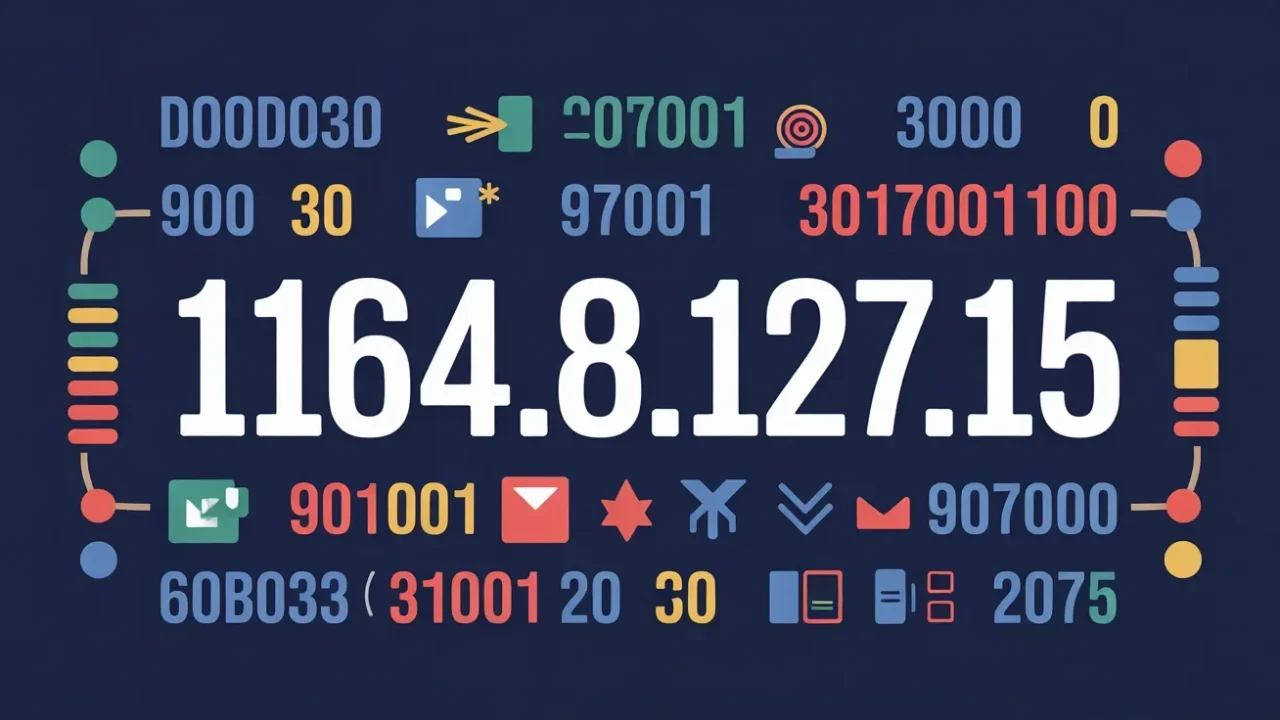
The string 1164.68.127.15 is commonly discussed online as an IP address-like sequence, but in reality, it does not fully conform to standard IPv4 rules. In a valid IPv4 address, each section (called an octet) must range between 0 and 255, while the first segment “1164” exceeds this limit. Because of this, many technical sources classify it as an invalid or malformed IP address format rather than a usable network identifier.
Despite being invalid in strict networking terms, this type of 1164.68.127.15 number often appears in blogs, logs, or content because users search it after seeing it in system logs or suspicious network activity. The curiosity around it comes from the assumption that it may represent a real server, attack source, or tracking node.

In most cases, references to 1164.68.127.15 are part of informational content explaining IP structure rather than describing an active real-world address.
Understanding IP Address Structure and Why Format Matters
IP addresses are the foundation of internet communication, allowing devices to identify and connect with each other across networks. In IPv4 systems, an address is made up of four numeric sections separated by dots, and each section must stay within the 0–255 range. This structure ensures proper routing of data across global systems.
When a number like 1164.68.127.15 appears, it violates this rule due to the first segment exceeding the allowed range. This makes it technically unusable in real networking environments. As a result, routers, servers, and DNS systems reject such formats immediately.
Understanding this structure is essential for cybersecurity professionals and IT engineers because even small formatting errors can lead to misconfigurations or debugging confusion.
Why 1164.68.127.15 Appears in Search Results and Online Discussions
One of the main reasons this IP-like string appears online is due to educational and SEO-driven content creation. Many websites use unusual or invalid IP examples to explain how networking works in simple terms. This makes it easier for beginners to understand concepts without exposing real sensitive IP data.
Another reason is user curiosity. People sometimes copy suspicious-looking numbers from logs, firewall alerts, or unknown system messages and search them online. This behavior often leads them to blog posts or forums discussing similar patterns.
Over time, repeated searches make such terms appear more common than they actually are in real network traffic.
Technical Analysis of 1164.68.127.15 Format Issues
From a technical standpoint, the biggest issue with 1164.68.127.15 is its invalid octet structure. IPv4 systems strictly enforce numerical limits to ensure consistent packet routing and network stability. Any value exceeding 255 automatically breaks the standard format.
This means that 1164.68.127.15 cannot be assigned to any device, server, or domain on the internet. It also cannot be resolved through DNS or used in networking configurations.
Some technical blogs use this example intentionally to highlight how invalid IP formats are detected by systems and rejected during validation processes.
Security Perspective: Should You Be Concerned About This IP?
From a cybersecurity perspective, 1164.68.127.15 itself does not represent a real threat because it is not a functional IP address. However, confusion arises when users mistake similar-looking valid IPs for dangerous ones.
Cybersecurity systems often analyze IP traffic to detect suspicious behavior such as unauthorized login attempts or scanning activity. But invalid IP formats like this one are typically filtered out before any real network interaction occurs.
Still, understanding such formats is useful because attackers sometimes use fake or malformed identifiers in logs or phishing attempts to confuse users.
How Invalid IP Addresses Are Used in Educational Content
Invalid IP addresses like 1164.68.127.15 are frequently used in tutorials, cybersecurity training materials, and networking blogs. Their purpose is to demonstrate how systems validate data without exposing real infrastructure.
For example, students learning networking may be shown invalid IPs to understand why format rules matter. This helps prevent configuration errors in real-world environments.
In this context, such IP-like strings serve as teaching tools rather than functional network identifiers.
Common Misinterpretations of 1164.68.127.15
Many users mistakenly believe that unusual IP formats like 1164.68.127.15 are linked to hacking attempts or hidden servers. However, most of these assumptions are incorrect and stem from misunderstanding how IP systems work.
Another common misconception is that any number appearing in logs must belong to a remote attacker. In reality, logs often include placeholders, system-generated entries, or malformed data.
Proper interpretation requires technical knowledge of networking protocols and validation rules.
Importance of IP Validation in Modern Networks
Modern networks rely heavily on strict validation systems to prevent errors and maintain stability. When a system encounters an invalid IP like 1164.68.127.15, it automatically rejects it before any data transmission occurs.
This validation is essential for preventing routing failures, misdirected traffic, and potential security vulnerabilities. Without it, networks would be vulnerable to confusion and breakdowns in communication.
As internet systems grow more complex, validation mechanisms continue to play a critical role in ensuring reliable global connectivity.
Conclusion: What You Should Know About 1164.68.127.15
In conclusion, 1164.68.127.15 is not a valid or functional IP address, but rather an example of an incorrect format used in educational or informational contexts. Its structure violates IPv4 rules, making it unusable in real networking systems.
Most online references to this number exist for explanation, SEO content, or user curiosity rather than real technical activity. It does not represent a server, attack source, or active network entity.